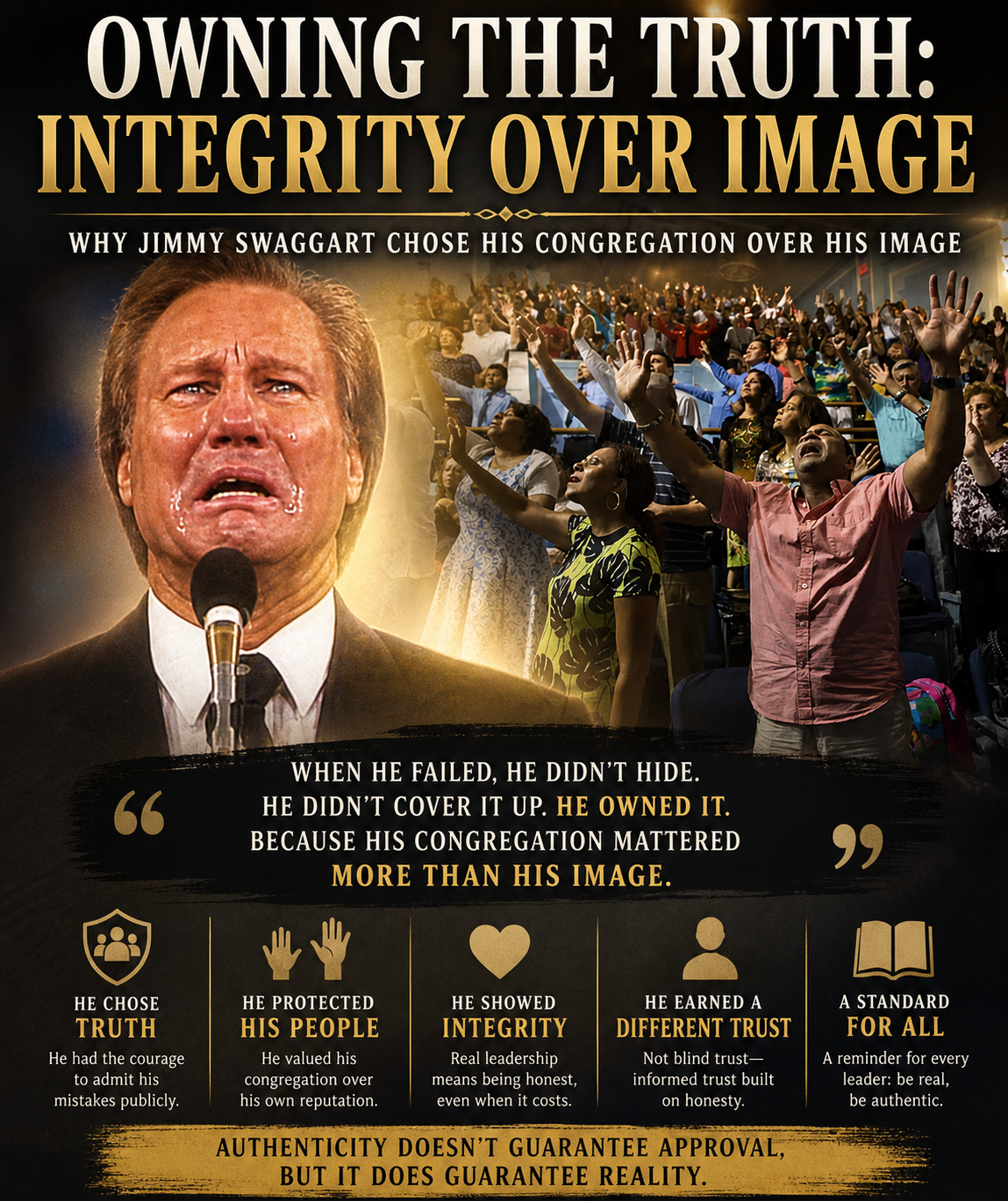
Owning the Truth: Integrity Over Image in the Ministry of Jimmy Swaggart
There’s a difference between someone who protects their image and someone who protects their people. That difference is where integrity lives—or dies.
When you look at the life and public moments of Jimmy Swaggart, one thing stands out: when he failed, he didn’t hide behind a polished mask. He didn’t construct a narrative to protect his reputation. He stepped forward and owned it. Publicly. Directly. Without pretending to be something he wasn’t.
That matters more than people realize.
The Courage to Drop the Mask
In a world where image management has become an industry, admitting fault is rare. Especially for public figures whose entire platform is built on trust and spiritual authority.
But Swaggart didn’t try to maintain the illusion of perfection. He didn’t position himself as untouchable or above failure. Instead, he acknowledged something deeply human: he made a mistake.
And that act—simple in concept, but heavy in consequence—takes real courage.
Because let’s be clear:
Owning failure publicly doesn’t preserve trust in the short term. It risks destroying it.
People walk away.
Doubt creeps in.
Reputation takes a hit.
Your brother’s perspective reflects that reality—trust was damaged. That’s not something to ignore or dismiss.
But there’s another side to that equation.
A Different Kind of Trust
For some, that same moment creates a different kind of trust—not blind trust, but informed trust.
Why?
Because now you know something concrete:
- When a mistake happens, it won’t be hidden
- When there’s failure, it won’t be dressed up as righteousness
- When truth is uncomfortable, it won’t be avoided
That’s not perfection. That’s consistency in honesty.
And for many people, that’s more valuable than a flawless image.
Integrity vs. Image Management
If someone chooses image over truth—if they hide, manipulate, or deflect—then you start moving into dangerous territory. That’s where influence becomes control. That’s where trust becomes illusion.
That’s where things start to resemble a system built on preserving authority rather than serving people.
By contrast, when someone risks their reputation to tell the truth, they’re signaling something different:
“The people I’m responsible for matter more than how I’m perceived.”
That distinction is critical.
The Broader Conversation: Authenticity in Leadership
This isn’t really just about one individual. It’s about a standard.
It raises a question for every public figure, especially those in spiritual or leadership roles:
- Are you willing to be seen as flawed?
- Are you willing to lose approval to remain honest?
- Are you willing to tell the truth when it costs you something?
Because authenticity isn’t proven when things are going well.
It’s proven when admitting failure comes with consequences.
Not Judgment—A Challenge
This isn’t about labeling people.
It’s not about calling anyone a sinner or condemning them.
It’s about raising the bar for what real leadership looks like.
People aren’t looking for perfection anymore—if they ever were.
They’re looking for:
- Honesty over performance
- Transparency over image control
- Realness over carefully managed personas
They want someone who doesn’t pretend to be untouchable—but is willing to be accountable.
Final Thought
Owning a mistake doesn’t erase the damage it caused. That part is real, and it matters.
But choosing truth over image—especially when it costs you—is a defining line.
For some, that line is where trust ends.
For others, it’s exactly where trust begins.
And maybe that’s the point:
Authenticity doesn’t guarantee approval.
But it does guarantee reality.